2–3 de setembro de 2026 · La Libertad, El Salvador
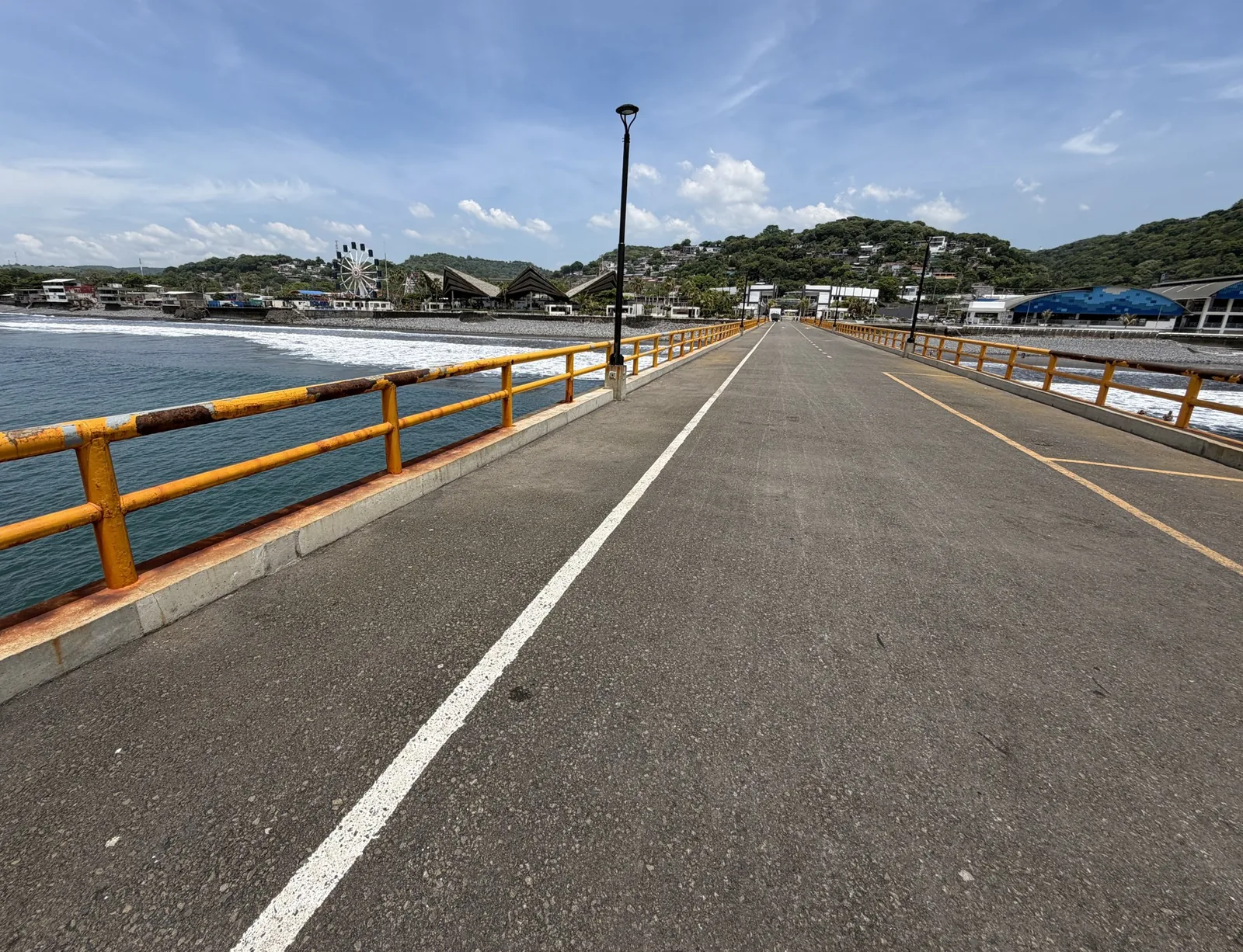
O píer do Puerto de La Libertad foi onde eu entendi de verdade onde tinha chegado. Grades amarelas, ferrugem, uma onda quebrando na areia vulcânica preta lá embaixo. Olha de volta pra orla e você tem o cartão-postal inteiro de uma vez: o malecón, os telhados de palha dos restaurantes, uma roda-gigante, a cidade subindo pelos morros verdes ao fundo. Esse trecho de costa é o Surf City — o ISA World Junior Championship acontece em quebras a poucos minutos de onde eu estava, El Sunzal e La Bocana, as duas a distância caminhável do píer.
O almoço foi o número que não sai da minha cabeça. Duas paradas, dois pedidos: pupusas num lugar, um prato de frango no seguinte — coxa e sobrecoxa, arroz, salada, umas tortillas, duas garrafinhas de V8 inclusas. Refeições de verdade, não lanchinhos. Dezoito dólares no total, gorjeta inclusa, nas duas paradas, pras duas pessoas. Eu não consigo comer no McDonald's por dezoito dólares no Canadá sozinho, e aqui foram duas refeições completas com direito a mesa e tudo, pras duas pessoas. Isso não é papo de marketing, é só o que estava na conta.
Cerveja é uma coisa estranha por aqui. Comprei um pack de doze latinhas no supermercado local — Stella Artois saiu a $1,40 a lata numa promoção, e a cerveja nacional, Pilsener, estava a $1,53 a lata sem nenhuma promoção rolando. A importada ganhou da nacional no preço, o que não era o que eu esperava ao entrar.
Dirigir aqui é uma escola à parte. Minha leitura depois de alguns dias: se você não vai ser assertivo, não sente atrás do volante por aqui. As estradas em si estão honestamente em melhor estado do que muitas que eu dirigi em casa — o variável é o trânsito. Motos abrem espaço pelos dois lados, aparecem por trás de você e entre os carros, e uma brecha que parece pequena pra você é uma brecha que alguém vai usar. Hesitar é visto como um convite pra ser ultrapassado, não como cautela. Espelhos e olhar por cima do ombro importam mais do que a sua velocidade. E você divide a estrada com caminhonetes levando crianças de uniforme em pé na caçamba — por aqui é só o trajeto escolar normal, não um espetáculo, e você dá espaço pra uma caminhonete dessas porque ela não freia como uma vazia.
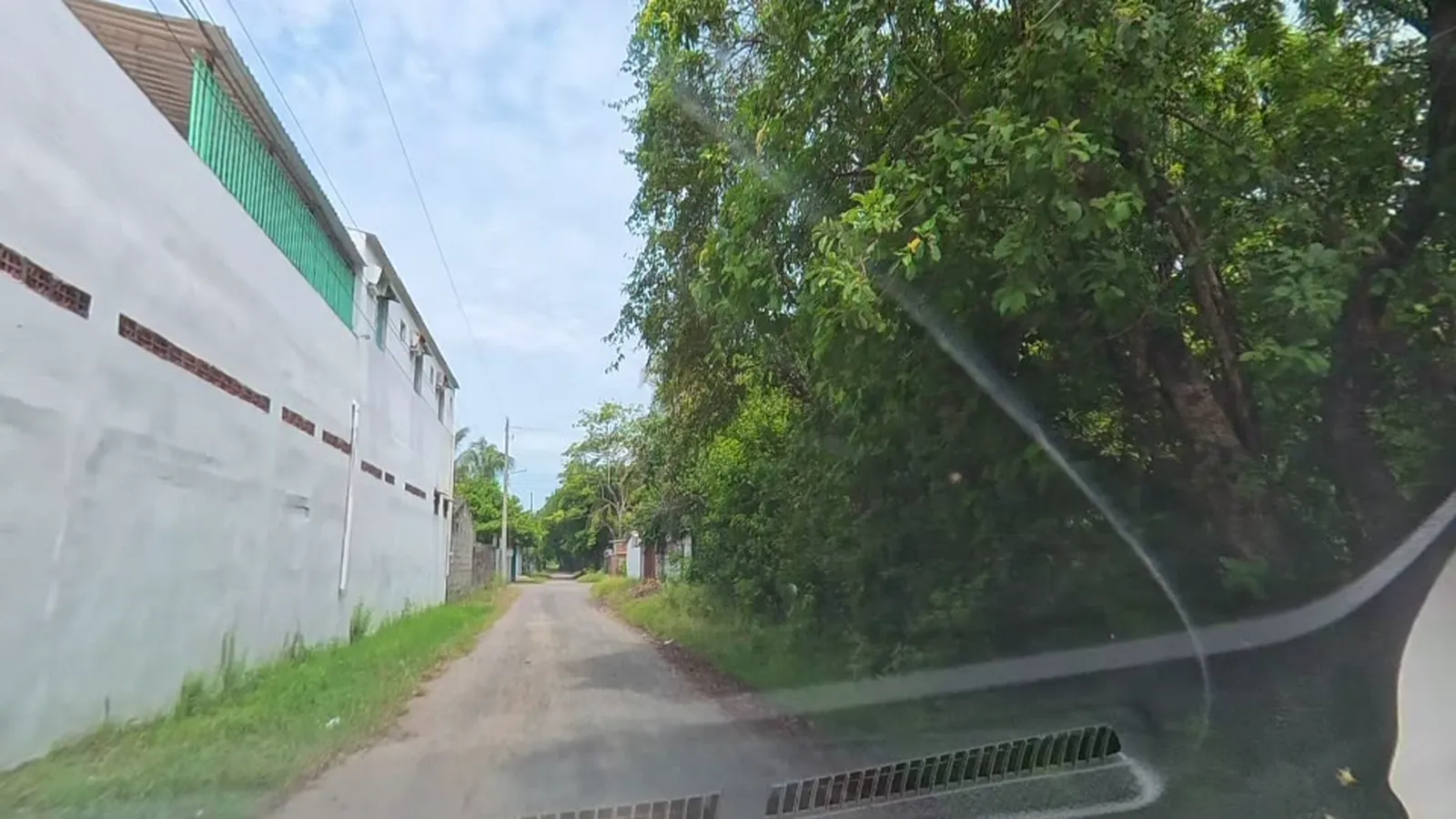
Uma coisa que eu não esperava: ao longo da rodovia, trechos de dossel de mata antiga não foram derrubados pra abrir a estrada. A estrada passa por baixo das árvores — podadas pra deixar passar, não derrubadas pra dar lugar. Vindo de um lugar onde a estrada sempre ganha e a árvore sempre perde, isso vale ser notado.
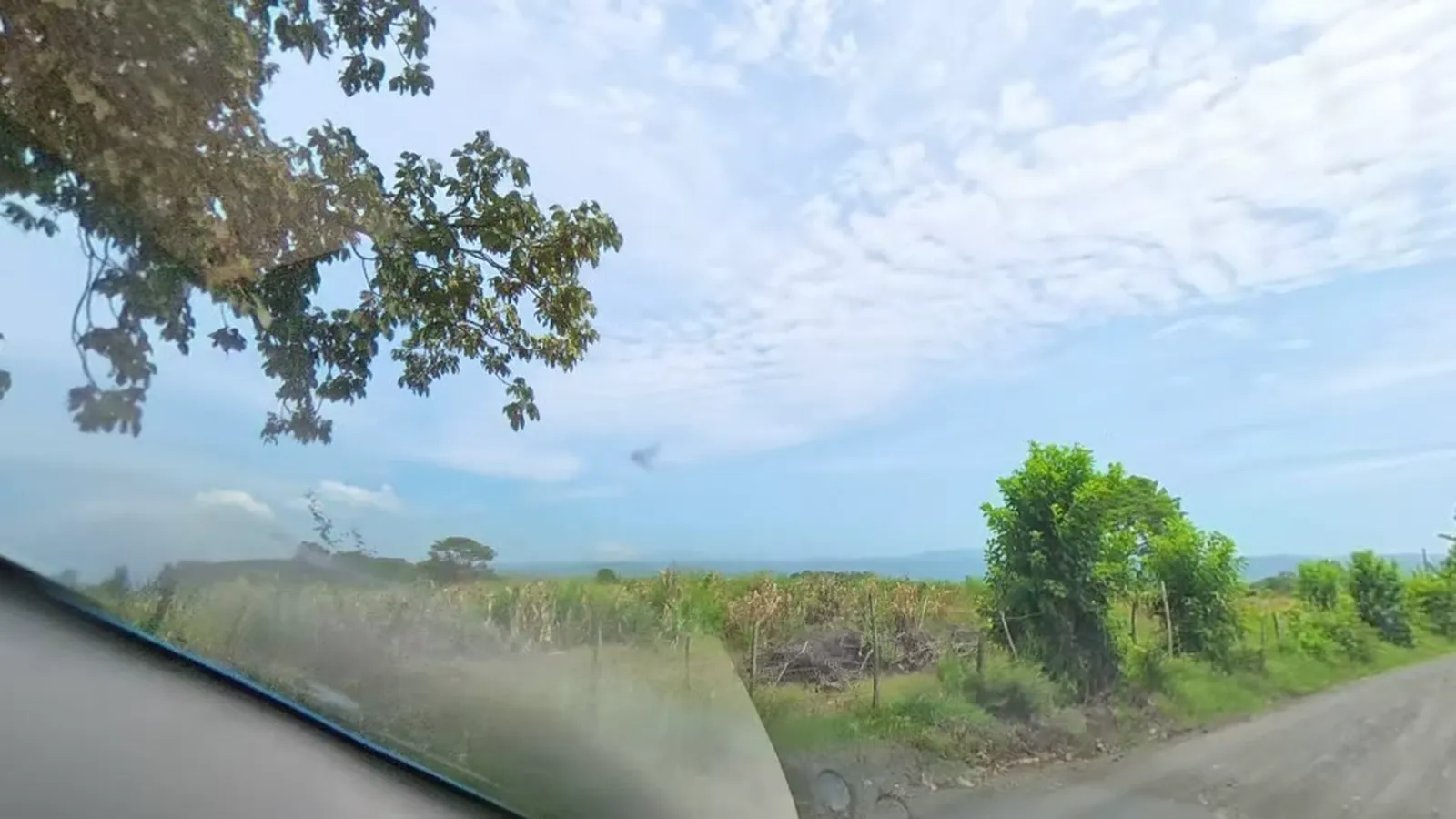
Aí a tempestade chegou de madrugada e levou a energia por treze horas. Sem gerador, sem bateria de backup na vila, e como o Wi-Fi é a única conexão por aqui, sem energia não tem conexão com nada. Primeiro teste real de infraestrutura do lugar, e ele reprovou do jeito que as tempestades de estação chuvosa aparentemente reprovam aqui com frequência — não é uma crise, é só como setembro funciona nessa costa. Vale saber se você está pensando numa estadia longa por essa região: inclua no orçamento uma fonte de energia backup, porque as tempestades não são a exceção.
Balanço: almoço, duas paradas, duas pessoas, gorjeta inclusa — $18,00. Cerveja, doze latinhas — Stella Artois $1,40/lata, Pilsener $1,53/lata.