30 September – 2 October 2026 · Monterrico, Guatemala
The bus left San Salvador at six in the morning: a Pullmantur double-decker, a window seat to myself. The bus sat in morning traffic at Lourdes Colón, then ran like an airline. A safety and welcome video, then a boxed breakfast made fresh that morning: an egg sandwich on a croissant, a wrapped muffin, a ketchup cup. The promised hot coffee turned out to be a box of apple juice. Still better than the eight-dollar instant coffee on the flight in. The crossing was easy.
One lesson: I forgot to set up an eSIM before the border and had no service in Guatemala until I found wifi. Set up the next country first, every time.
Guatemala City by half past twelve, cooler at 23 or 24 degrees. I picked up a rental, gas at about 43 quetzales a gallon, and drove to the coast through a tropical downpour. The wipers were on full and I could barely see the taillights ahead. Monterrico is three and a half hours out. I booked two nights at a beach hotel with five guests in the whole place, me included.
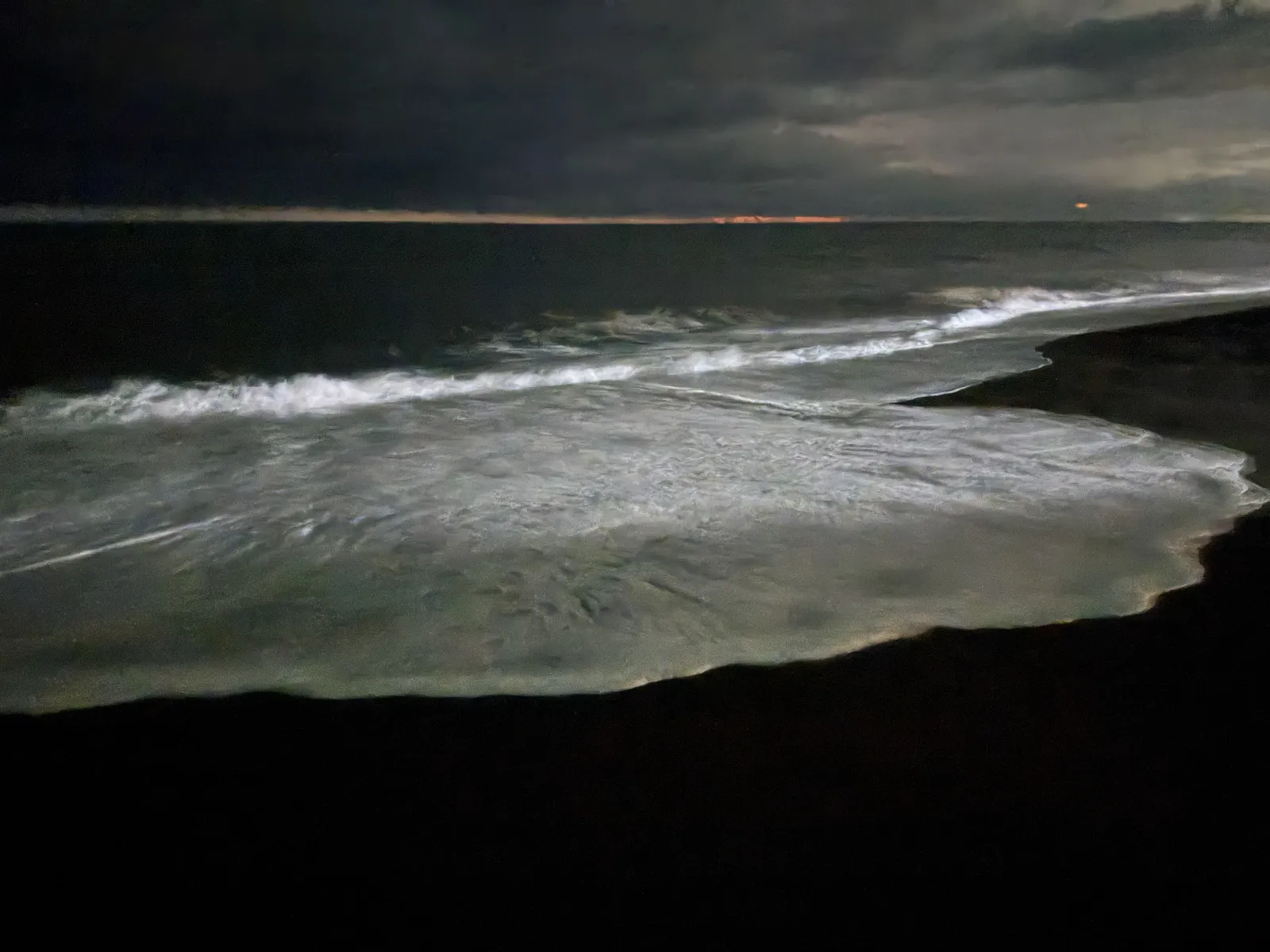
The first night on the Pacific side: black volcanic sand, storm clouds, the last orange line of sunset on the horizon and the surf glowing white under the phone's night mode. A palapa restaurant lit up against the palms down the beach.
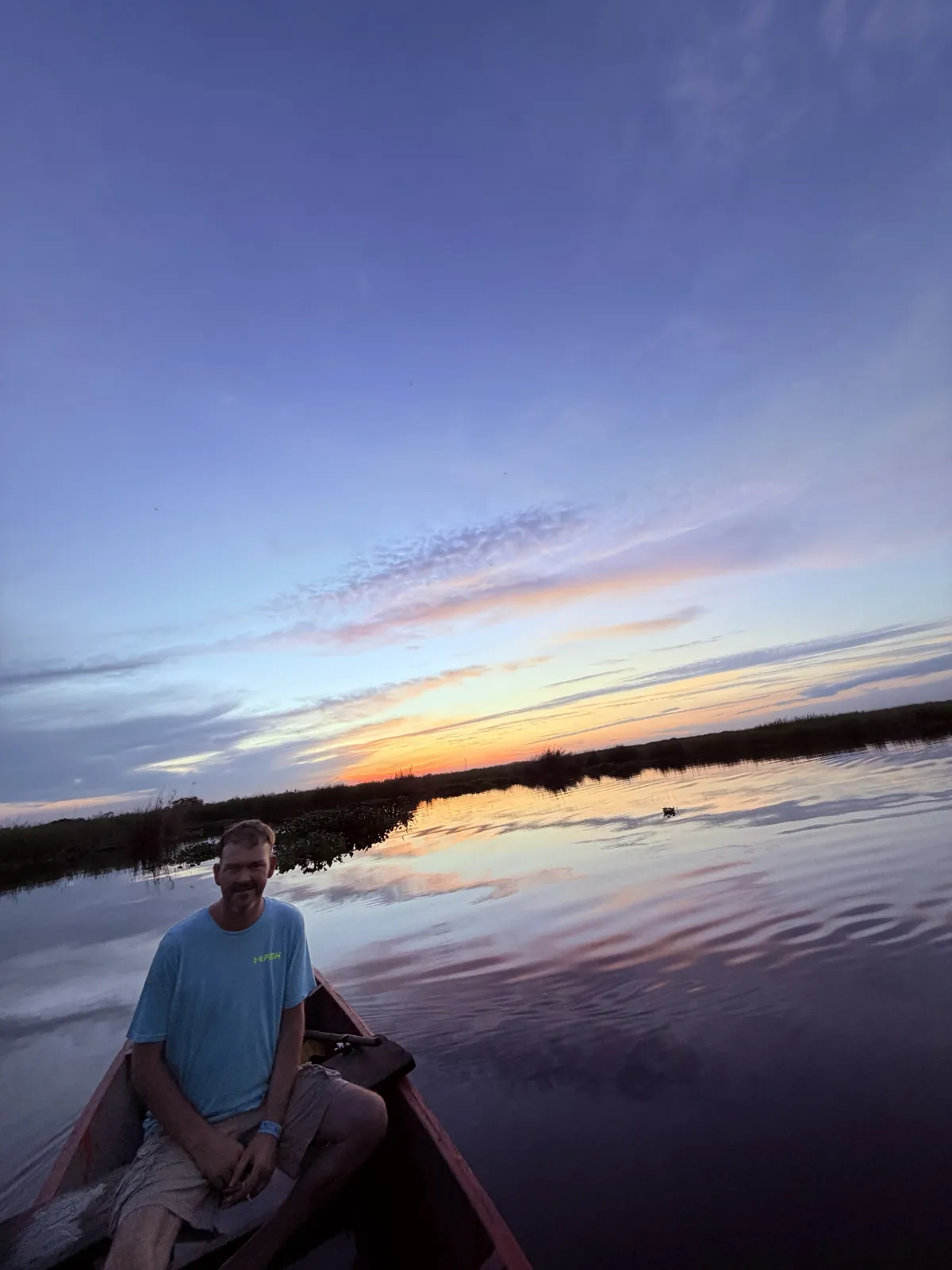
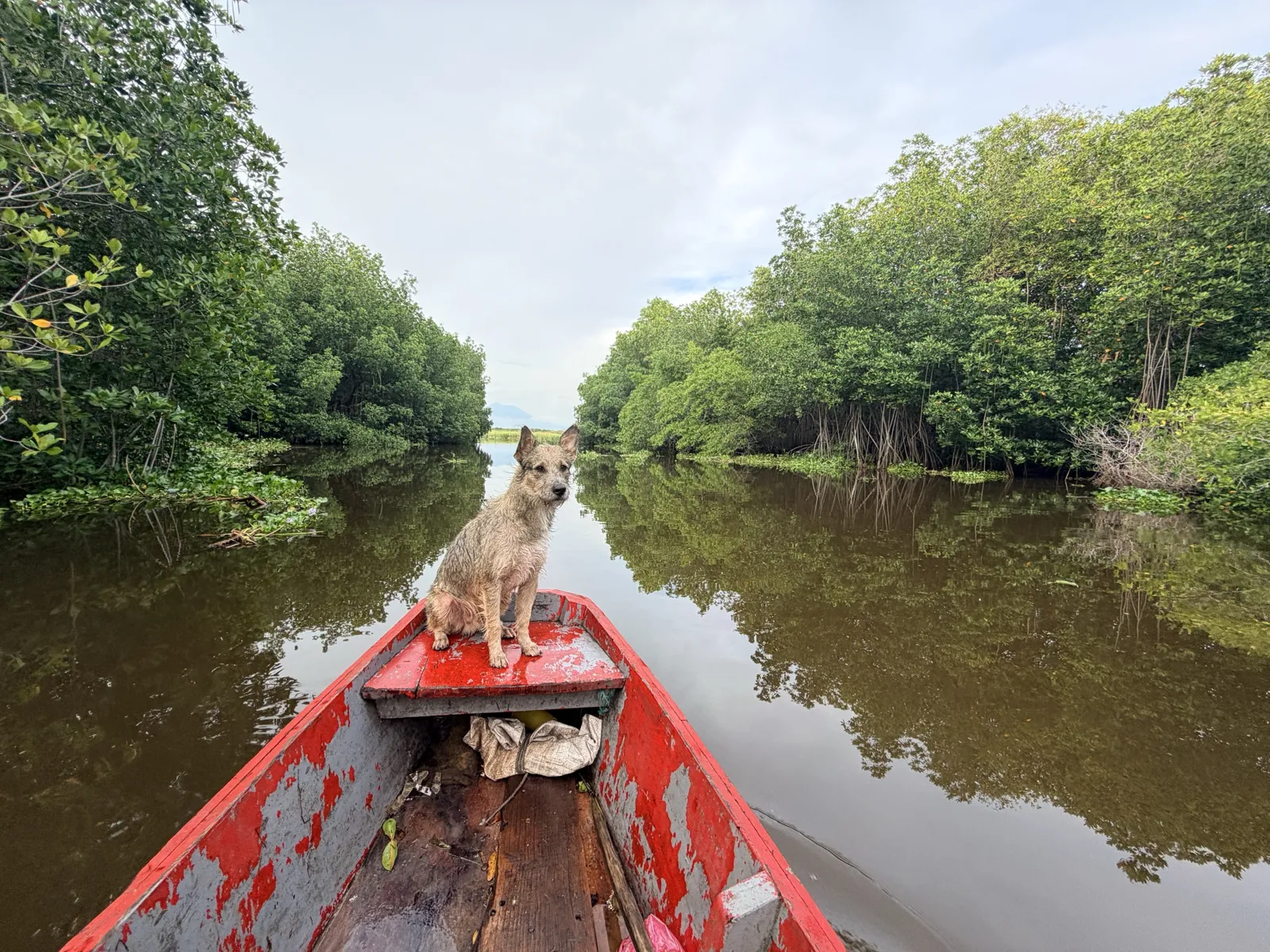
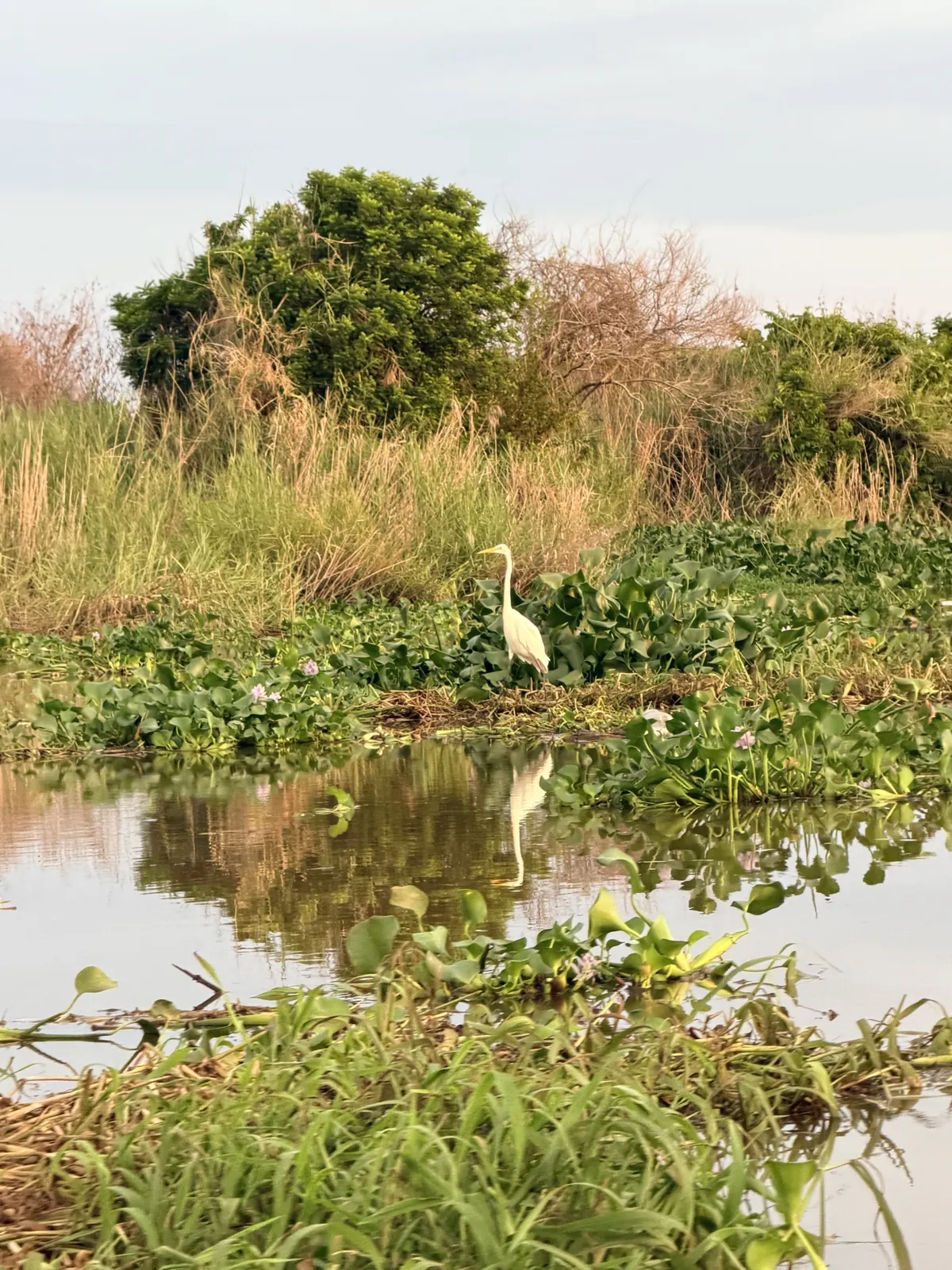
The next day I did the guides' tours after all. Two hours on horseback through the coconut palms, in a borrowed cowboy hat, at 250 quetzales an hour. In the late afternoon, a wooden canoe into the mangrove channels, 100 quetzales for about two hours. Glassy water, water hyacinth, and a sky going lilac and then orange behind the reeds. A great egret stood in the hyacinth. The camp's year-old dog rode the bow of the red canoe like a figurehead. The guides had strung a catch net across the channel, to be pulled at five in the morning, and I met a shrimp fisherman working the mangroves. No mosquitoes, calm water, perfect temperature. It was one of the best sunsets of the trip so far.
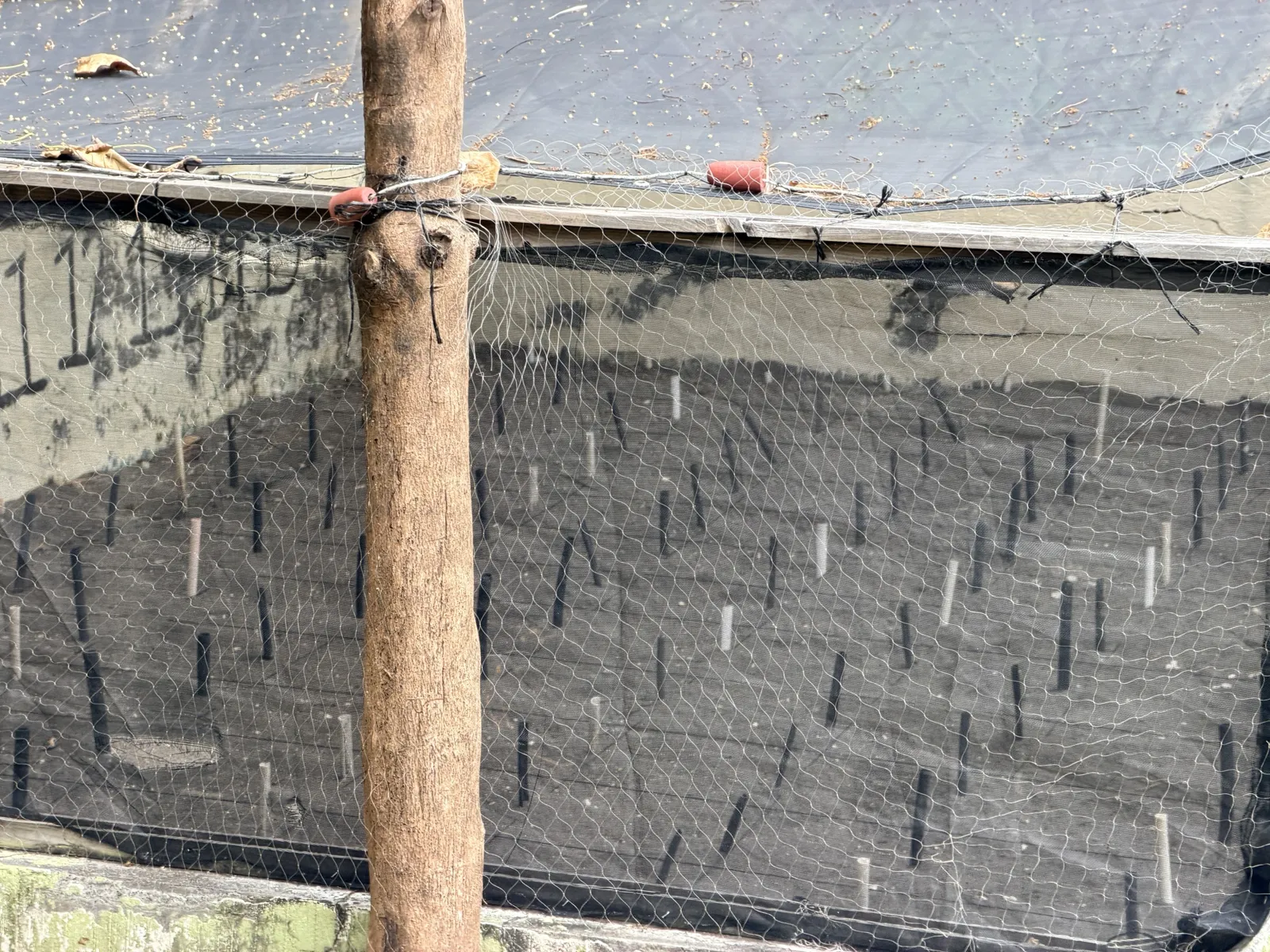
In town is a turtle hatchery, a tortugario: netted, shaded sand pens under palapas by the beach, with rows of stakes marking each buried nest. I also tried fried chicken feet from a shop called Super Rapidito ("Flavour to the bone"). Good overall, but I don't see the hype. Rubbery, and nothing to them. Five quetzales for the feet, eight to ten for chicken pieces.
On the morning of the 2nd, coffee at the palapa, string lights still up, the Pacific grey under cloud. At low tide you can see why the waves hit so hard: the sand drops steeply into deep water right off the beach, so the swell does not slow down before it breaks. A red flag, no swimming. The hotel dog had killed an opossum in the night, and the staff took it home to cook for supper. They told me it tastes like chicken here.
Guatemala, like El Salvador, polices speed with bumps, not radar. Every village, school and shop has one, often unmarked. It works without a single officer. The cost is your suspension, and the extra time to reach the coast. Then I drove up into the highlands.
Ledger: horses Q500 for two hours, mangrove canoe Q100, chicken feet Q5, chicken Q8-10, gas about Q43 a gallon. The sunset was free.