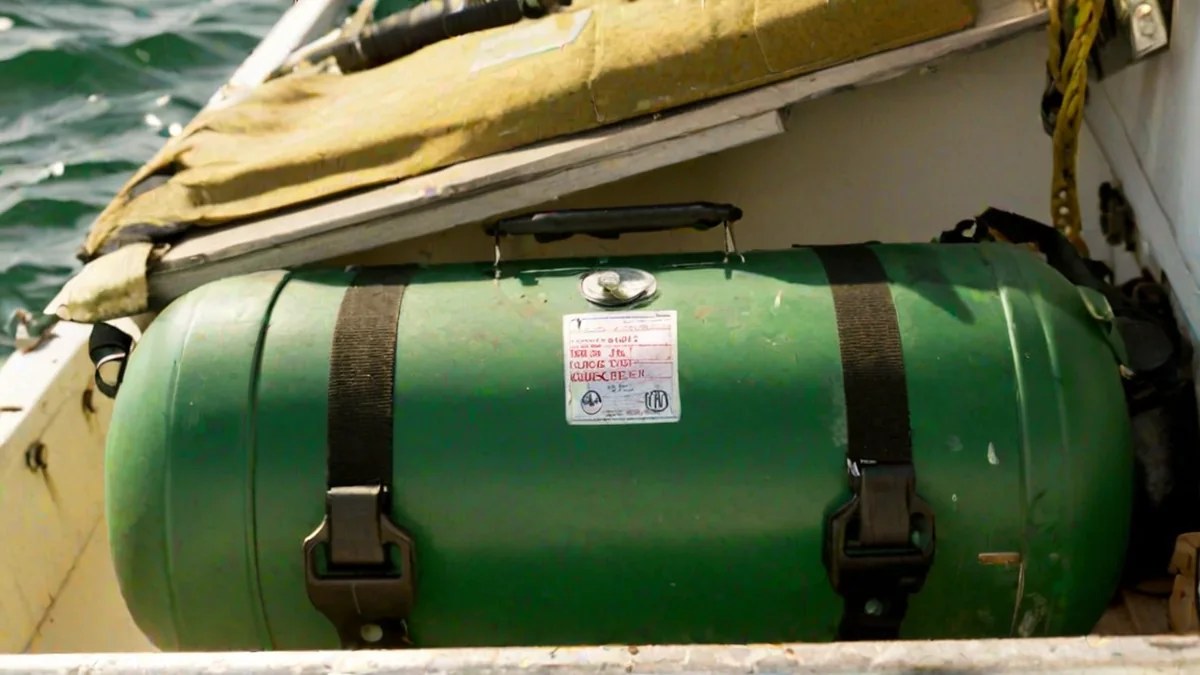
I spent most of my working life either fighting fires or running heavy-civil construction sites. Both jobs run on the same question: what happens when something goes wrong, right now, with the people you've got and the equipment you've got. That's the question I ask when I walk onto a dive boat. Not "is this a nice operation." How to choose a safe dive shop comes down to whether they've actually rehearsed the bad day, or just hope it doesn't come.
This checklist is the methodology behind Vastura Travel. It's not theoretical — it's built from NFPA-style incident command thinking, applied to a boat instead of a fire ground. I haven't run it on a hundred dive shops yet. I'm about to, starting this September. But the criteria don't change by country, and they don't change because the water is warm and the staff are friendly.
Why "how to choose a safe dive shop" is the wrong search until you know what to check
Most advice on this stops at "check their certification agency" or "read the reviews." Reviews tell you if people had fun. They rarely tell you if the O2 kit works. A five-star rating and a functioning emergency plan are two different things measured by two different people — the diver enjoying their vacation, and the diver who needed the plan.
Here's what I actually check, in the order I check it.
1. Emergency oxygen — not "do you have it," but "is it real"
Every dive shop will tell you they carry emergency O2. That's not the question. The question is whether the kit in front of you would actually work if someone came up bent in twenty minutes.
- Check the gauge. A full cylinder reads near its rated pressure. If it's sitting at a quarter tank, that's not an emergency kit, that's a prop.
- Check the date. Regulators and masks have service intervals. Ask when the unit was last serviced and expect an answer without hesitation, not a shrug.
- Check it's accessible, not stowed. If it's buried under dive gear bags in a hatch nobody can open fast, it might as well not be aboard.
A good operator will show you the gauge without being asked twice. A bad one will say "yeah we've got oxygen" and change the subject.
2. The written emergency action plan — ask the crew, not the owner
Every serious operation has an emergency action plan: who calls it, who runs first aid, who drives the boat back, who calls the chamber or the coast guard, and in what order. The trick isn't asking the owner if one exists. Owners always say yes.
Ask a crew member — a divemaster, a deckhand — to describe it. Not recite it. Describe it, in their own words, like it's muscle memory. On a fire ground we call this a pre-incident plan. If everyone on shift can tell you the plan without looking at each other first, it's real. If the divemaster looks over at the boat captain to answer for them, that tells you the plan lives on a laminated sheet somewhere, not in anyone's head.
What a good answer sounds like
"If someone surfaces symptomatic, we get them on O2 immediately, captain radios the base on channel X, we've got DAN's number posted by the radio, nearest chamber is at [location], here's who runs first aid while the captain drives." Specific. Ordered. Boring, the way a good plan should be.
What a bad answer sounds like
"We'd, uh, figure it out — call someone I guess." That's not a plan. That's optimism.
3. Communications redundancy
One radio is not a system, it's a single point of failure. What happens if the radio fails, or the boat is out of range? Ask:
- Is there a backup means of communication — a second radio, a satellite device, a phone that works offshore?
- Does every boat carry it, or just the flagship?
- Do they know the actual nearest hyperbaric chamber and its number, not just "there's one somewhere on the mainland"?
4. Kit condition and service records
You don't need to be a technician to spot neglect. Hoses that are cracked or taped, BCDs with a chemical smell of mildew, regulators that free-flow on the surface for no reason — these are visible from a few feet away if you look.
Ask to see service records for tanks and regulators. Tanks need hydrostatic testing on a fixed schedule (typically every 5 years, visual inspections annually) — a shop that can't produce this, or looks confused by the question, is telling you something about how they run the rest of the operation too.
5. The briefing — what it covers, not how long it is
A long briefing isn't a good briefing. A good briefing covers, specifically:
| Covered | Why it matters |
|---|---|
| Entry and exit procedure for this specific site | Generic briefings mean the crew hasn't actually looked at conditions today |
| Current, direction, and what to do if separated | Tells you they've checked today's conditions, not yesterday's |
| Max depth and turnaround air pressure | Basic dive planning discipline |
| Hand signals specific to hazards at this site | Site-specific knowledge, not a script |
| What to do if you surface away from the boat | The actual emergency scenario, addressed before it happens |
If the briefing is the same five sentences regardless of site or conditions, nobody actually planned today's dive. They're running a script.
6. Ratios
Ask the diver-to-divemaster ratio for the certification level being dived, and ask if it changes for night dives, wreck dives, or students. A shop that keeps the same ratio for a checkout dive with new Open Water divers and a drift dive with a strong current isn't adjusting risk to the situation — they're running one process for everything, which is exactly what you don't want from people responsible for your air supply.
What separates a good operator from a bad one
It's not confidence. Bad operators are often the most confident, because they've never been tested. Good operators are specific, slightly boring when they answer safety questions, and don't mind you asking. If a shop gets defensive when you ask to see the O2 gauge or ask a deckhand to describe the emergency plan, that reaction is itself the data point. People who run a tight operation are used to being asked and don't take it personally.
Where this fits into Vastura Travel
This checklist is the backbone of how Vastura Travel audits operators. Vastura Travel is pre-launch — I haven't run this against a shop yet in the field. Starting September 2026 I'll be doing exactly that, in person, unannounced, starting in Belize and working south then across to Southeast Asia. When an operator passes, they get marked Verified, not because they paid for a listing, but because someone independent asked these questions and got real answers.
Until then, take the checklist and use it yourself. It costs nothing to ask a crew member to describe the emergency plan. Their answer will tell you more than any star rating.