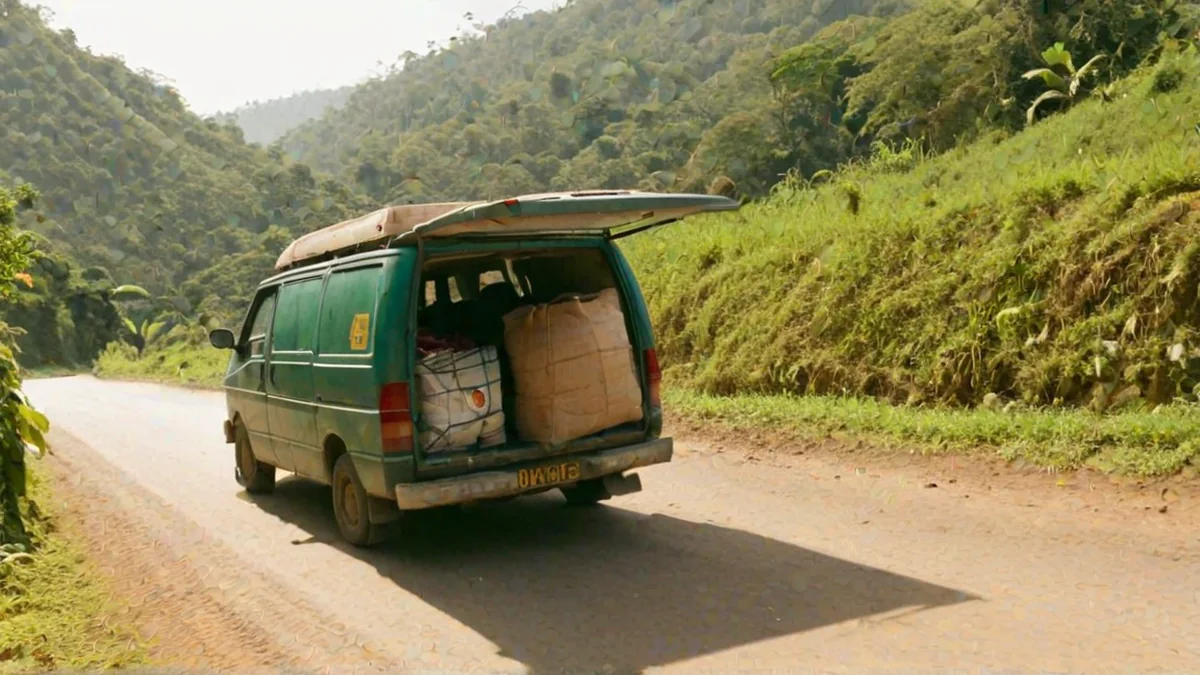
The trip I'm planning starting September 2026 runs Belize to Guatemala to Honduras to Nicaragua to Costa Rica, then on to Brazil, before crossing to Türkiye, Thailand, Laos, Vietnam, Cambodia, and the Philippines. Most of the Central American leg is going overland — buses, shuttles, boat taxis — not flights. This is the plan I've built so far, not a trip report. I haven't done any of it yet.
Overland travel through Central America is cheaper than flying between every stop, and it's also where a lot of the actual logistics headaches live if you don't plan for them. Here's what I've worked out.
Overland travel in Central America: shuttle vs. public bus
Two very different products get sold under similar-sounding names:
| Option | What it actually is | Trade-off |
|---|---|---|
| Tourist shuttle | Door-to-door minivan, usually booked in advance, mixed group of travellers | More expensive, faster, more predictable, handles border logistics for you |
| Public "chicken bus" | Local bus, often a repurposed former US school bus, fixed routes, pay on board | Far cheaper, slower, no fixed schedule reliability, you handle borders yourself |
| Long-distance coach lines | Scheduled intercity coach on major routes, fixed seats, fixed times | Comfortable middle ground on major routes, but doesn't reach smaller towns |
The shuttle premium over a public bus is often several multiples of the cost for the same route. Whether that's worth it depends on how much your time and predictability are worth versus your budget — there's no universally right answer, it's a trade-off to make deliberately rather than by default.
Border crossings — plan for friction, not smoothness
Land border crossings between Central American countries vary a lot in how organized they are. General planning points:
- Have small bills in local currency or USD for any crossing or exit fees — card payment at a land border is often not an option.
- Expect informal "helpers" at busy crossings offering to guide you through for a tip. This isn't necessarily a scam, but confirm any fee before accepting help, and know that immigration staff themselves should never be charging you unofficial fees.
- Shuttle services that specialize in a specific border crossing route generally know the current process and paperwork requirements better than you will from research alone — this is one place where paying for the shuttle buys real value, not just comfort.
- Keep printed or offline copies of anything you might need — onward travel proof is sometimes requested and isn't always practical to pull up on a phone with no signal.
Boat taxis — a separate category with separate risk factors
Coastal and river routes in parts of Central America run on boat taxis rather than roads. The same operator-assessment approach I use for tour boats applies directly here: life jackets actually available, not stowed; a captain who won't run in conditions that don't support it; a reasonable passenger count for the vessel. Boat taxis are often the only practical option for certain routes, which makes it more important, not less, to look at the boat before committing, the same way you would for a tour.
Realistic costs — treat any number as a planning estimate, not a quote
Costs shift with fuel prices, season, and route, and I haven't priced these routes in person yet. As a general planning pattern rather than a firm quote: public buses are typically the cheapest way to cover distance by a wide margin, tourist shuttles cost meaningfully more for the convenience and door-to-door service, and boat taxis vary enormously by route and distance. Treat any specific number you read anywhere, including here eventually once I've done it, as a planning estimate to verify locally, not a fixed price.
Night travel — the one rule I'm not negotiating on
Avoid overland night travel where it can reasonably be avoided. This isn't dramatic caution for its own sake — it's the same reasoning I'd apply to any operation where visibility and response time both drop at the same time something goes wrong. Road conditions, driver fatigue, and reduced visibility all stack against you at night, and it's also when opportunistic crime against travellers is more common on certain routes. Where a route requires an overnight leg, an established overnight coach service with a fixed schedule and a reputation is a different risk category than an informal option after dark.
How to not get stranded
- Confirm the last onward connection of the day before you commit to a route — some border towns and transfer points have very limited departures after a certain hour.
- Build in a buffer day around border crossings rather than scheduling a same-day connection on the other side, especially the first time you're not sure how long a crossing will take.
- Carry a printed or downloaded map and offline translation, since signal at rural crossings and transfer points is often unreliable.
- Know the name and rough location of at least one legitimate lodging option at your transfer point, in case a connection falls through and you need to stay the night.
Why overland beats flying on cost, most of the time
Regional flights within Central America often cost several times a shuttle fare for the same route, before accounting for the time spent getting to and from small regional airports. Overland travel is slower — sometimes considerably slower — but for a year-long trip where the schedule isn't fixed to a two-week vacation window, that trade generally favours the bus or shuttle. The exception is when a flight saves an entire day that would otherwise go to a genuinely miserable or risky road route, at which point the time and safety trade can outweigh the cost difference.
Where this fits into Vastura Travel
Getting between destinations is as much a part of the trip as the destinations themselves, and it's an area I expect Vastura Travel to cover in practical terms as the directory grows — shuttle operators, boat taxi routes, and the actual on-the-ground logistics, verified the way everything else on the site is verified. This is the plan as I've built it before leaving. I'll be updating this once I've actually crossed these borders, starting in Belize in September 2026, and I'll correct anything here that turns out to be wrong.