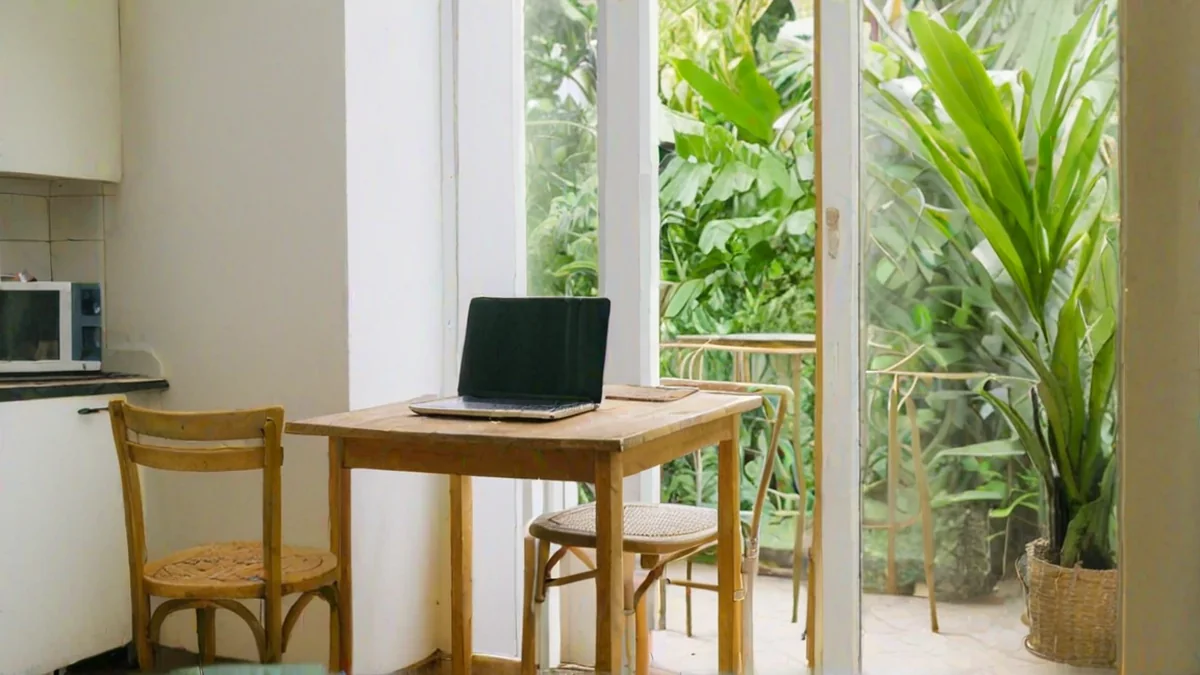
Heavy-civil construction taught me to never sign anything based on a rendering. What you're actually going to get is what you inspect in person, not what's in the listing photos. That's the whole approach behind booking a monthly rental abroad as a long-stay traveller: book short, verify in person, negotiate the real rate once you've seen the place.
I'm building this into how I plan the year-long trip starting September 2026 — I won't be booking a month anywhere sight unseen. Here's the method.
Monthly rental abroad, long stay: book a week first, not a month
The standard advice for long-stay nomad and slow-travel bookings is simple and it works: book one week through a platform, arrive, and negotiate a monthly rate directly with the owner or manager once you've actually seen the unit. Monthly rates negotiated in person typically run 20–40% below the nightly rate multiplied out — landlords would rather have guaranteed occupancy at a lower nightly-equivalent than gaps between short bookings. But that discount only makes sense once you know the place is worth staying in for a month.
Booking a full month upfront, sight unseen, means you're locked in before you know if the water pressure is usable or the street outside is loud past midnight.
What to verify before paying for the month
Do this walkthrough in the first day or two, before any money changes hands for the extended stay:
| Check | How to actually test it |
|---|---|
| Wifi speed | Run an actual speed test on your phone, don't take the listing's word for it — ask for the wifi password on arrival and test immediately, at the time of day you'll actually be working |
| Water pressure | Run the shower and the kitchen tap at the same time. Weak pressure that's fine alone often drops to nothing when both run together |
| Noise at night | Stay through at least one full night before committing. Bars, roosters, generators, and nearby construction don't show up in daytime photos or during a daytime viewing |
| Air conditioning | Turn it on and leave it running for an hour. Check it actually cools the room, not just that it powers on |
| Kitchen usability | Check the stove actually lights, the fridge is cold, and there's enough counter space and cookware to actually cook, not just reheat |
Why photos lie about noise specifically
Noise is the single biggest gap between a listing and reality, because it's the one thing a photo cannot show you at all. A quiet-looking street can sit above a bar that gets loud at 11pm. A jungle view can come with a rooster twenty feet from the window that starts at 5am. Read reviews specifically for noise complaints, and if you can, ask the host directly: "What's the noise like at night, honestly?" A host with nothing to hide will tell you. A host who deflects the question is telling you something too.
Deposits — what's normal and what isn't
A security deposit equal to one to two weeks' rent, refundable at checkout minus any actual damage, is standard in most long-stay markets. Red flags on deposits:
- A deposit that's a large fraction of the full month's rent, especially if requested by wire transfer or cash with no receipt
- No written record of the unit's condition at move-in — take your own photos of everything on arrival, dated, before you unpack
- A host who wants the full month plus deposit paid before you've even seen the unit in person
Get the deposit terms in writing, even if it's just a text message or email exchange, before handing over cash. It costs nothing and it's your only leverage if there's a dispute at checkout.
What's normal to negotiate, and what isn't
Reasonable to negotiate once you've seen the place and want to extend: the monthly rate itself, whether utilities are included, cleaning frequency, and whether a slight discount applies for paying the full month upfront in cash versus through a platform that takes a cut. Not reasonable to expect: a host waiving the deposit entirely, or agreeing to skip any written agreement at all. A host willing to skip all paperwork is easy in the moment and a liability if anything goes wrong later.
A simple sequence that avoids most problems
- Book 5–7 nights through a platform with buyer protection, not directly, for the first stay.
- Walk through the checklist above in the first 48 hours.
- Sleep at least one full night before deciding.
- If it's good, negotiate the monthly rate directly with the host — expect meaningfully below the nightly rate, in writing.
- Get a simple written agreement covering the rate, deposit, dates, and what's included, even informally.
Why this matters more on a long trip than a short one
On a two-week vacation, a noisy room or weak wifi is an inconvenience you tolerate. On a month-long stay, especially if you're trying to work from the room, it's the difference between a productive month and a wasted one. The extra day or two spent verifying costs you almost nothing against a full month booked wrong.
Where this fits into Vastura Travel
Long-stay accommodation is one of the categories Vastura Travel will cover as the directory grows past launch — introductions to independent hosts and small operators, not booking through a platform that takes a commission. I haven't done a month-long stay on this trip yet; that starts once I'm on the road in September 2026. This is the process I'll be using myself, starting with the first stop in Belize.